
In our previous article, Insights from the GenAI Adoption Survey in Enrian, we highlighted a recurring tension: GenAI enables incredibly fast prototyping, but production work still demands rigor that current tools struggle to sustain. This “dual-lane” reality — disposable prototypes on one side, enterprise-grade production on the other — raises an open question: can we close the gap? Can prototypes become more than throwaway experiments?
This follow-up article looks at exactly that. If prototypes are to serve as stepping stones toward production, we need stronger practices during the vibe-coding phase. The goal is simple: maximize reusability and minimize the risk of rewriting everything from scratch. Drawing on interviews and lived experience, we see five practices that make a clear difference.
Before writing a single prompt, realize that choosing a vibe-coding tool is already a design decision. It might feel like you’re just picking an interface — but in practice, you’re also choosing the underlying tech stack, frameworks, and even deployment model that will shape what comes next.
Some tools, like Lovable, Bolt or V0.dev, are fantastic for greenfield prototyping. They generate a complete stack out of the box — for Lovable, for example, React front end, Supabase backend, and all the plumbing in between — letting you move fast when the goal is to explore ideas from scratch.
But if your prototype needs to fit within an existing ecosystem, those same assumptions can become friction points. The AI will happily generate a new stack beside your current one, forcing translation later — rewriting components, adjusting APIs, or reworking integrations just to make things align.
The point isn’t to avoid these tools altogether, but to use them consciously. In practice, teams often combine both approaches — using tools like Lovable or v0.dev for rapid exploration, and Cursor or Copilot to refine and extend that work within their existing stack. Making those choices intentionally helps ensure prototypes don’t just run, but can evolve — a small but critical aspect of resilience.
In short: every vibe-coding tool carries architectural opinions. Make sure you are the one deciding which opinions to keep.
AI-generated code often produces user interfaces that look passable and work fine for a demo, but the underlying code is messy, inefficient, or fragile. A designer or business user may not spot these flaws, yet they become critical once the prototype needs to scale. If the intent is to reuse the code rather than discard it, engineering input becomes essential.
Prototyping is most effective when treated as a shared activity: engineers, designers, and business colleagues working together from the start. The real strength of vibe coding lies in allowing engineers to join the conversation earlier, validating feasibility while ideas are still forming. This way, what looks good on the surface can also serve as a foundation for production.
Beyond risk reduction, this shared approach accelerates alignment. Business and design get rapid feedback on feasibility, while engineers influence direction early instead of arriving late to fix missteps.
Big prompts can be effective when the task is narrow and precise, but they become risky when the request is broad. Broad prompts create space for confusion and increase the chances of duplicated code or patterns that break good practices. A safer path is to work in smaller, testable increments — for example, asking the AI to build a login component rather than an entire authentication system, or a search bar rather than a full search flow. Each increment can be validated before moving on, turning the prototype into a layered structure rather than a fragile monolith. This progressive review also helps catch architectural inconsistencies, dependency mismatches, or logic gaps before they propagate.
This incremental approach mirrors how production code is built, making it far more likely that the prototype will survive the transition.
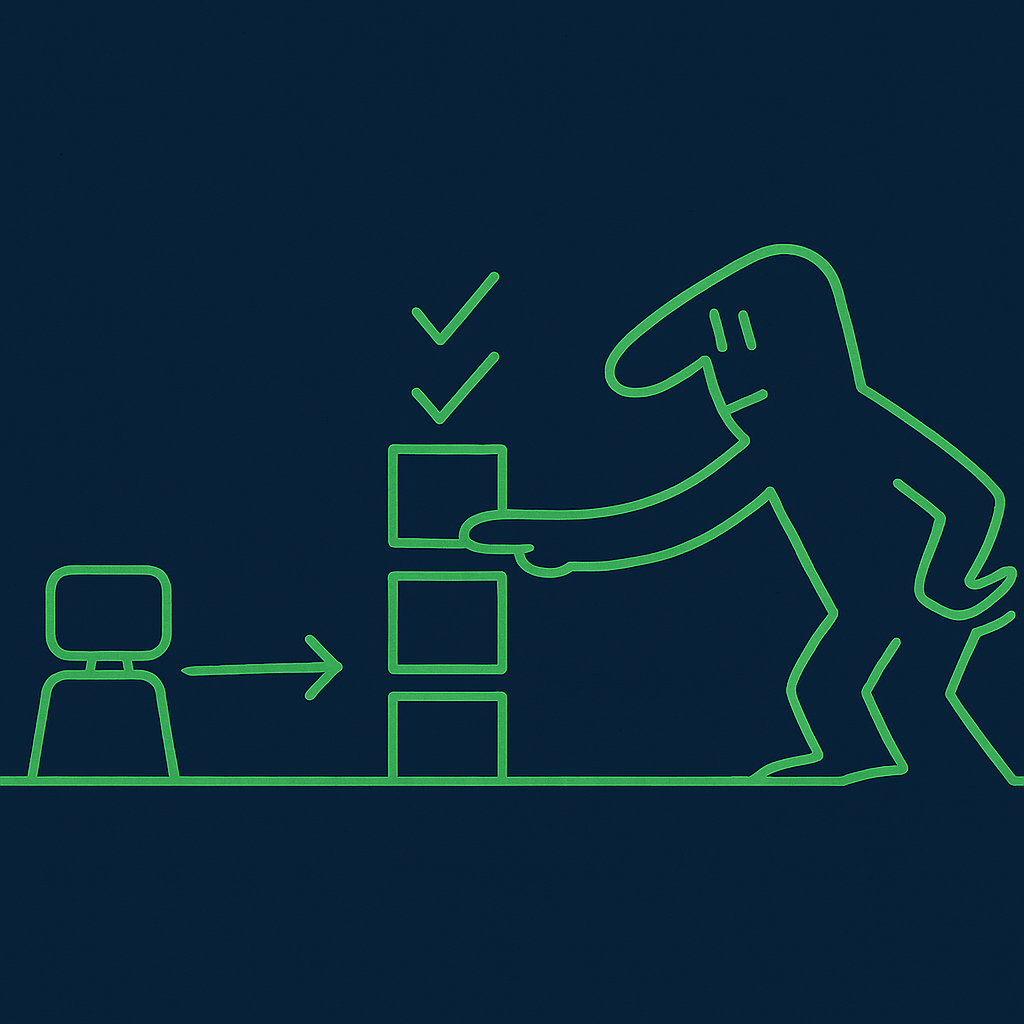
What I see that gives me much more control is not to start and ask: "OK, I need this project. Go do it!" What I do is ask the AI: "Give me a plan". Then I have this document. I refine it further. When I am ok with it, then I say : "OK! Take this part of the document and implement it" - Nicola, Solutions Architect
LLMs are generalists. If preferences remain unstated, they default to generic market code. That can mean misaligned frameworks, inconsistent naming, or architectures that don’t match your standards. The challenge is less about which framework or guideline you choose and more about the gaps created by unspoken assumptions.
The remedy is to provide context upfront. Share the data model, specify preferred frameworks and define coding guidelines early. Turning preferences into explicit boundaries narrows the solution space and nudges the AI toward outputs that are both functional and consistent with yoour production practices.
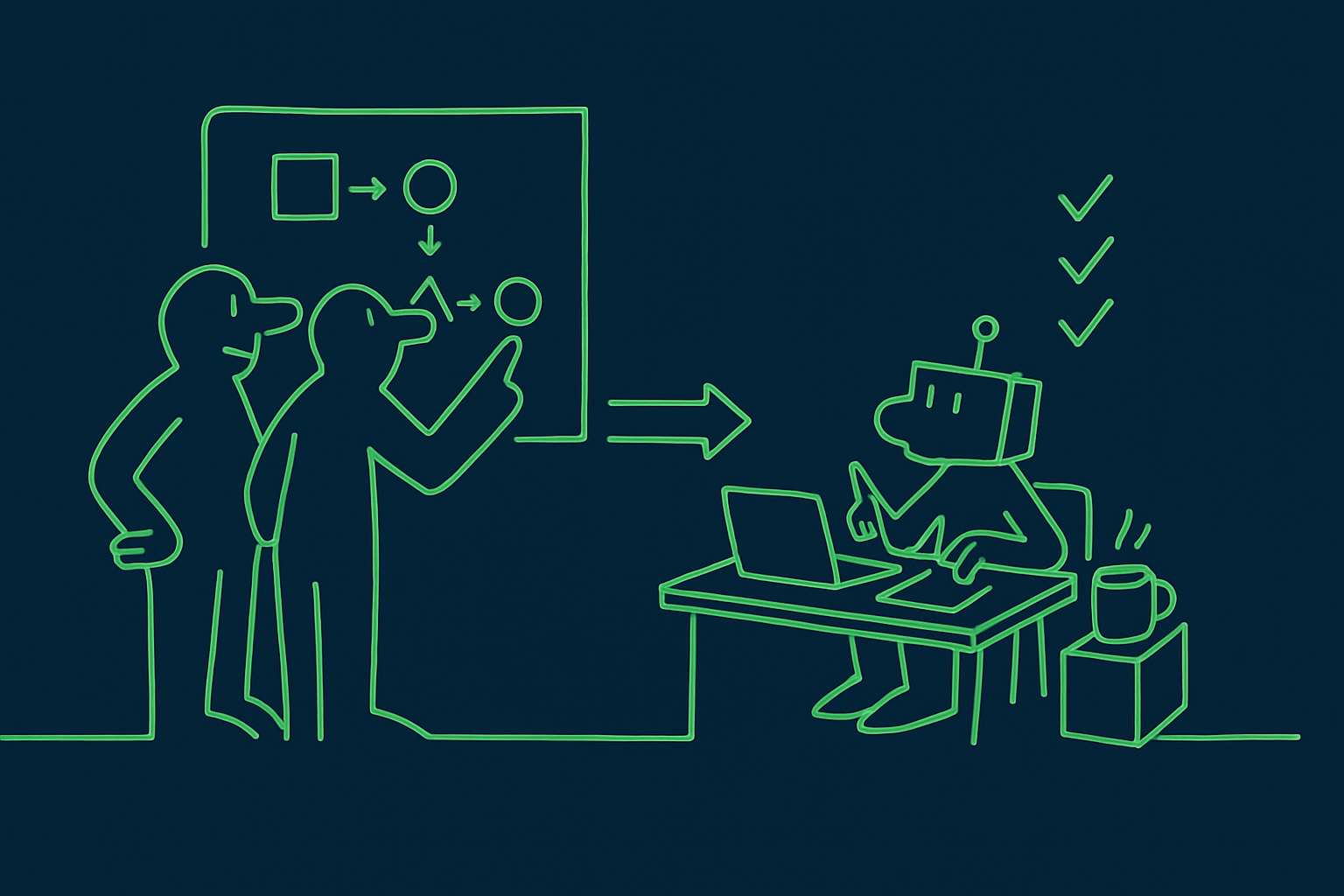
You have to be straight with the rules, you have to give it the context… otherwise… it will pick something that… is more frequently used across the market… and maybe it does not match your principle, your rules, your behavior. - Cristiano, Solutions Architect
No matter how polished the output looks, it must undergo the same rigor as human-written code. Every piece should be version-controlled, peer-reviewed, and validated before merging. As prototypes grow, this becomes even more important: errors compound as context expands.
By treating AI output as drafts requiring human approval, teams ensure that prototypes evolve into stable, maintainable codebases rather than collapsing under their own weight.
Prototyping with GenAI doesn’t have to mean starting over when production begins. By involving engineers early, working iteratively, providing context upfront, and enforcing code review, teams can turn quick demos into foundations for real products.
Looking ahead, two challenges stand out:
Addressing these challenges will define how we move from disposable experiments toward more durable, production-ready prototypes.


